The Caravan Database
Is the era of the caravan gas bottle coming to an end? The growing trend of the all electric caravan australia suggests a major shift in how Aussies tour the country. Powered by high-capacity lithium batteries, vast solar arrays, and energy-efficient appliances, these gasless vans promise unprecedented off-grid freedom and safety. This move away from LPG is transforming the caravanning experience, allowing travellers to run everything from air conditioning to induction cooktops without ever needing to refill a gas bottle.
This emerging category of towables, led by innovative models like the Royal Flair Eco Mate, offers a glimpse into a self-sufficient, sustainable future for life on the road. For those who dream of unplugging completely and exploring the most remote corners of Australia, the all-electric caravan is a game-changer.
Why is the All Electric Caravan Australia Trend Taking Off?
The concept of an all electric caravan australia is built on a powerful synergy of modern technologies. It's not just about removing the gas bottles; it's about creating a robust, self-sustaining ecosystem that can power a modern home on wheels, anywhere, anytime. This revolution is driven by several key components working in concert.
At the heart of every gasless van is a formidable lithium battery system. Unlike traditional AGM or lead-acid batteries, lithium-ion (specifically LiFePO4) batteries are lighter, charge faster, have a longer lifespan, and can be discharged more deeply without damage. These systems are paired with a high-wattage inverter, which converts the DC power from the batteries into 240V AC power, ready to run household appliances. This combination is what makes it possible to use power-hungry items like microwaves, coffee machines, and air conditioners miles from the nearest power pole.
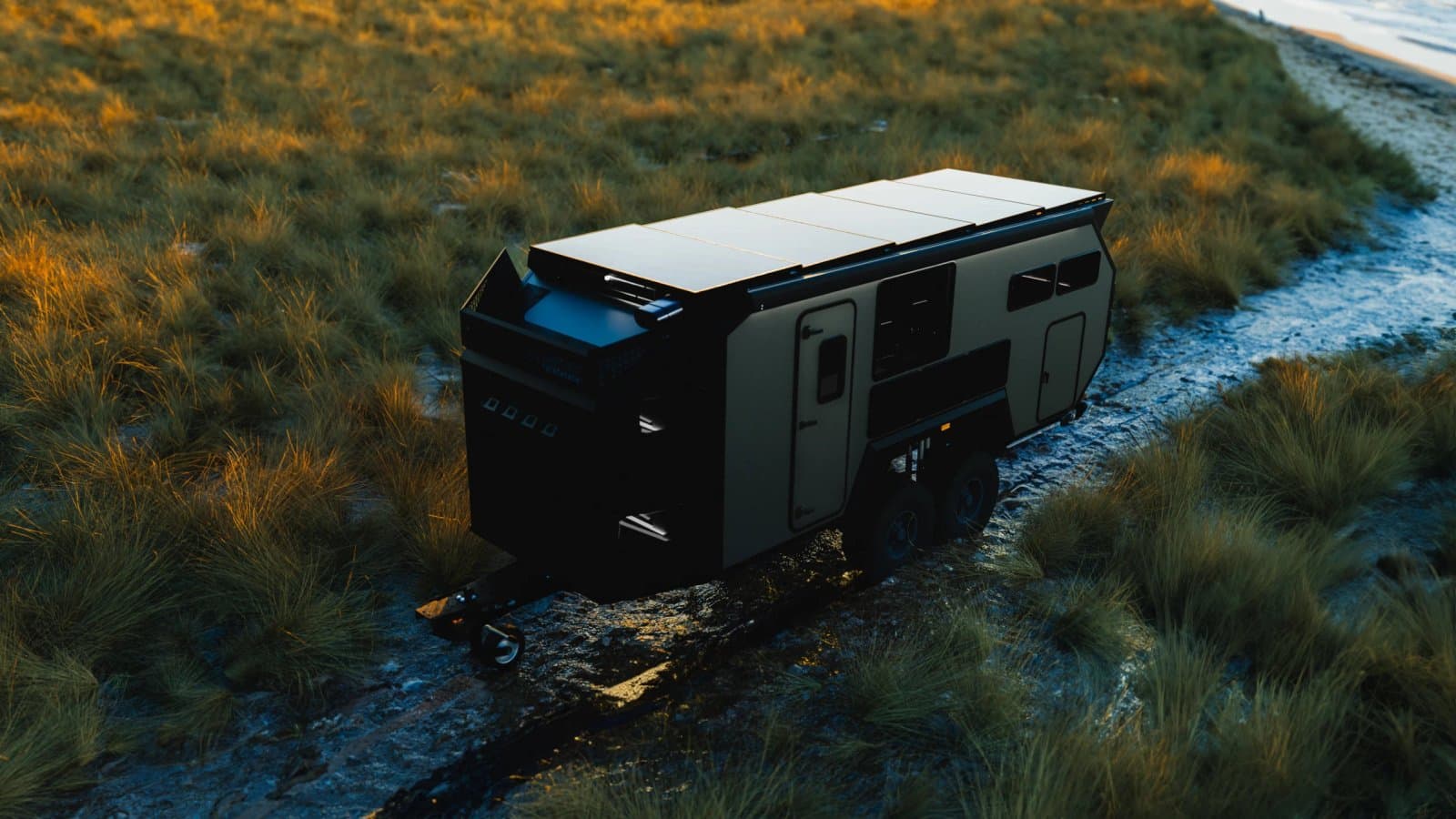
To keep these large battery banks topped up, all-electric caravans are fitted with extensive solar panel arrays on the roof. Modern, high-efficiency panels can generate significant power even in less-than-ideal conditions, constantly feeding energy back into the system. This means that on a sunny day, you can be running your appliances and recharging your batteries simultaneously, creating a truly sustainable power loop. This setup fundamentally changes the off-grid equation from 'conserving power' to 'managing abundance'.
Finally, the move to all-electric is enabled by a new generation of efficient appliances. Gas cooktops are replaced with sleek induction hobs that offer fast, precise heat control. Gas hot water systems are swapped for highly insulated electric units. Fridges are almost exclusively 12V/240V compressor models, which are far more efficient and reliable in hot weather than the old 3-way absorption fridges. This complete transition to electric appliances not only simplifies the van's systems but also enhances safety by removing all combustible gas lines and ignition sources from the living space.
The Benefits and Drawbacks of Going Gasless
While the allure of unlimited, silent power is strong, transitioning to an all-electric caravan involves a trade-off. Understanding both the significant advantages and the potential challenges is crucial for any prospective buyer. It represents a different style of caravanning that requires a shift in mindset.
Benefits of an All-Electric Van
- Unmatched Off-Grid Freedom: This is the primary drawcard. With a sufficiently large battery and solar setup, you can stay off-grid indefinitely without sacrificing comfort. Running the air conditioner on a hot day in the outback or using the microwave for a quick meal is no longer a luxury reserved for powered sites.
- Enhanced Safety and Compliance: Removing LPG systems entirely eliminates the risk of gas leaks, fire, and explosions. It also simplifies compliance, as there are no gas lines or ventilation requirements to certify, making the caravan's internal systems simpler and safer.
- Simplicity and Convenience: Managing a single energy source is far easier than juggling electricity and gas. You never have to worry about finding a place to swap or refill a gas bottle, a task that can be difficult in remote areas. Your entire power status can be monitored from a single digital screen.
- Quiet Operation and Sustainability: Without a gas-powered generator, your power generation is completely silent. Relying on the sun for energy significantly reduces your travel's carbon footprint, offering a more environmentally conscious way to explore Australia's natural wonders.
Potential Drawbacks to Consider
- Higher Initial Cost: The cutting-edge technology required for a true all-electric setup does not come cheap. The high-capacity lithium batteries, large inverters, and extensive solar arrays represent a significant upfront investment compared to a traditional gas-equipped caravan.
- Increased Weight: Lithium batteries, while lighter than older types for the same capacity, still add considerable weight. A large battery bank can weigh hundreds of kilograms, which eats into your available payload and demands a tow vehicle with a high gross combined mass (GCM) and towing capacity.
- Energy Management is Key: While powerful, the system isn't infinite. Owners must become adept at energy management, monitoring consumption against solar input. Several consecutive days of heavy cloud cover can deplete reserves, requiring a change in habits, a drive to charge via the alternator, or a visit to a powered site.
- Specialised Maintenance: The advanced electrical systems are complex. If something goes wrong in a remote location, finding a technician with the expertise to diagnose and repair high-end inverters or battery management systems (BMS) can be more challenging than finding a general caravan repairer.
Leading the Charge: A Closer Look at an All-Electric Pioneer
Several Australian manufacturers are embracing the gasless revolution, but few have committed as wholly as Royal Flair. Their Eco Mate range is designed from the ground up to be a showcase of what's possible in a self-sufficient, all-electric platform.
Royal Flair Eco Mate EM18-1 (2026)
The Royal Flair Eco Mate EM18-1 is a purpose-built family caravan that fully embodies the all-electric philosophy. With sleeping arrangements for up to five people, it's aimed squarely at families who want to explore far from the beaten track without leaving modern conveniences behind.
Its specifications highlight the robust nature of this type of van. With a Tare Mass of 3200kg and an Aggregate Trailer Mass (ATM) of 4500kg, it provides a massive 1300kg payload. This capacity is essential to accommodate the heavy-duty electrical system, large water tanks, and all the gear a family needs for extended trips. However, this weight also means it requires a serious tow vehicle; think American trucks or an Iveco Daily, as most standard 4WDs are not rated to tow 4.5 tonnes. At 8.17 metres long, it's a substantial van that offers generous living space inside.
Comparison of Featured All-Electric Models
To help you assess the specifications of these next-generation caravans, here is a direct comparison. As more models enter the market, you can use our free caravan comparison tool to see how they stack up.
| Model | Sleeps | Length (m) | Tare (kg) | ATM (kg) |
|---|---|---|---|---|
| Royal Flair Eco Mate EM18-1 | 5 | 8.17 | 3200 | 4500 |
Frequently Asked Questions about All-Electric Caravans
Can you really run air conditioning in an all-electric caravan when off-grid?
Yes, absolutely. This is one of the primary selling points. The combination of a large lithium battery bank (often 10kWh or more) and a powerful inverter (3000W+) is specifically designed to handle the high, continuous draw of a modern reverse-cycle air conditioner for several hours, powered entirely by the batteries.
What happens if there's no sun for several days?
This is a critical energy management scenario. All-electric vans have three main ways to charge: solar panels on the roof, a DC-to-DC charger that uses the tow vehicle's alternator while driving, and a 240V charger for when you plug into mains power at a caravan park or at home. If you face extended cloudy weather, a few hours of driving or a one-night stopover at a powered site is usually enough to fully replenish the batteries.
Are all-electric caravans significantly heavier?
Yes, they generally are. While removing two 9kg gas bottles saves a little weight, a large lithium battery system can easily add 100-200kg or more to the caravan's tare mass compared to a standard setup. This increased weight is a crucial factor and must be matched with a capable and legally compliant tow vehicle.
Conclusion: Is an All-Electric Caravan Right for You?
The shift towards the all electric caravan australia marks a significant and exciting evolution in the industry. For travellers who prioritise off-grid capability, safety, and the convenience of a single power source, these gasless models offer a compelling vision of the future. The ability to live comfortably in remote locations without the tether of a power cord or the need to refill gas bottles is a powerful proposition.
However, this freedom comes at a price—both in initial cost and in weight. The decision to go all-electric depends entirely on your travel style, budget, and towing setup. If you are a dedicated free-camper who spends weeks or months off-grid, the investment could pay dividends in lifestyle and experience. If you primarily stay in caravan parks, a traditional gas-and-electric model may still be a more practical choice.
The all-electric caravan is no longer a futuristic concept; it's a reality on Australian roads. As the technology continues to improve and become more accessible, it's poised to redefine what it means to be self-contained. Ready to explore the future of touring? You can browse all caravans available on The Caravan Database to see the full range of options.