The Caravan Database
The simplest way to determine what can my car tow is by comparing your vehicle's maximum braked towing capacity with the caravan's Aggregate Trailer Mass (ATM). Your car's capacity must be equal to or greater than the caravan's fully loaded ATM for you to be safe and legal on Australian roads. Understanding this, along with other key weights like Tare Mass and Tow Ball Mass, is the single most important step before you purchase a caravan.
Navigating the world of caravan weights can feel like deciphering a secret code. Failure to get it right can lead to dangerous instability on the road, voided insurance, and hefty fines. This guide will break down everything you need to know in plain English, ensuring you can confidently match your car to your dream caravan. We will cover:
- The meaning of key weight acronyms (ATM, GTM, Tare, TBM, GCM).
- A step-by-step process to check your vehicle's limits.
- Detailed towing requirements for popular caravan models.
- A clear comparison to help you choose.
Decoding Caravan Weights: The Acronyms You Must Know
Before you can confidently answer "what can my car tow?", you need to understand the language written on your vehicle's tow bar placard and the caravan's compliance plate. These figures are the non-negotiable rules of towing.
Tare Mass
Tare Mass (or Tare Weight) is the weight of an empty caravan as it leaves the factory. It includes any standard fittings but does not account for water in the tanks, gas in the bottles, or any of your personal belongings. It's the baseline weight of the van. While it's a useful starting point, you will never tow your caravan at its Tare Mass, so it should not be the primary figure you use for matching a van to your car.
Aggregate Trailer Mass (ATM)
This is the most critical number. The Aggregate Trailer Mass (ATM) is the maximum permissible weight of the caravan when fully loaded and unhitched from the tow vehicle. It includes the Tare Mass plus everything you add to it: water, gas, food, clothes, camping gear, and any aftermarket accessories. Your vehicle's 'maximum braked towing capacity' must be equal to or greater than the caravan's ATM. For example, if a caravan has an ATM of 2500kg, your car must have a towing capacity of at least 2500kg.
Gross Trailer Mass (GTM)
Gross Trailer Mass (GTM) is the weight transferred to the ground by the caravan's axles when it's fully loaded and hitched to the tow vehicle. It is the ATM minus the Tow Ball Mass. While less commonly used for initial vehicle matching than ATM, it's an important figure for understanding the load on the caravan's own running gear and is specified by the manufacturer on the compliance plate.
Tow Ball Mass (TBM)
Also known as Tow Ball Download, TBM is the amount of downward force the fully loaded caravan's coupling exerts on your vehicle's tow ball. As a general rule, this is about 10% of the caravan's total loaded weight (its ATM). Every tow bar has a maximum TBM rating, and your vehicle's rear axle has a maximum load limit. Exceeding the TBM can negatively affect the tow vehicle's steering, braking, and stability, making it a crucial safety consideration.
Gross Combination Mass (GCM)
Gross Combination Mass (GCM) is the maximum legal weight of the tow vehicle and the caravan combined, as specified by the vehicle manufacturer. This includes the vehicle itself, all its occupants, fuel, and luggage, plus the fully loaded caravan (the ATM). It's easy to overlook GCM, but exceeding it is illegal and dangerous. For example, a ute with a 3500kg towing capacity and a 6000kg GCM cannot legally tow a 3500kg caravan if the ute itself (with passengers and gear) weighs more than 2500kg (6000 GCM - 3500 ATM = 2500 vehicle limit).
So, What Can My Car Tow? A Step-by-Step Guide
Now that you understand the terminology, you can follow a simple process to ensure any caravan you're considering is a safe and legal match for your car.
Step 1: Find Your Vehicle's Towing Capacity
Your car's towing specifications are the first place to look. You can find this information in the owner's manual, on a placard inside the driver's side door jamb, or on the tow bar itself. You are looking for three key numbers:
- Maximum Braked Towing Capacity: The maximum weight you can tow if the trailer has its own brakes. This must be ≥ the caravan's ATM.
- Maximum Tow Ball Mass: The maximum downward weight your tow ball can handle. This must be ≥ the caravan's actual TBM.
- Gross Combination Mass (GCM): The total allowed weight of your car and caravan combined.
Step 2: Check the Caravan's Compliance Plate
Every caravan sold in Australia has a compliance plate (or vehicle plate) fixed to it, usually on the A-frame or inside the front boot. This plate is legally required to list the essential weights, including the Tare Mass, Aggregate Trailer Mass (ATM), and Gross Trailer Mass (GTM). The ATM is the golden number you need to compare against your car's towing capacity.
Step 3: Do the Maths (ATM vs. Towing Capacity)
This is the moment of truth. Compare the caravan's ATM from its compliance plate with your vehicle's maximum braked towing capacity. If your car's capacity is higher than or equal to the caravan's ATM, you have a potential match. If the caravan's ATM is even 1kg over your car's limit, you cannot legally or safely tow it. There is no grey area here.
Step 4: Don't Forget Payload, TBM, and GCM
Once you've confirmed the ATM is within your car's limit, consider the other factors. Calculate the caravan's payload by subtracting its Tare Mass from its ATM. This tells you how much gear, water, and gas you can carry. Ensure this is sufficient for your needs. Also, estimate the TBM (typically 10% of the ATM) and check it against your car's TBM limit. Finally, estimate your total combined weight to ensure you remain under your vehicle's GCM.
Caravan Models and Their Towing Requirements
To put this all into perspective, let's look at a few real-world examples from our database. These models span a wide range of weights, showcasing how different caravans require very different tow vehicles.
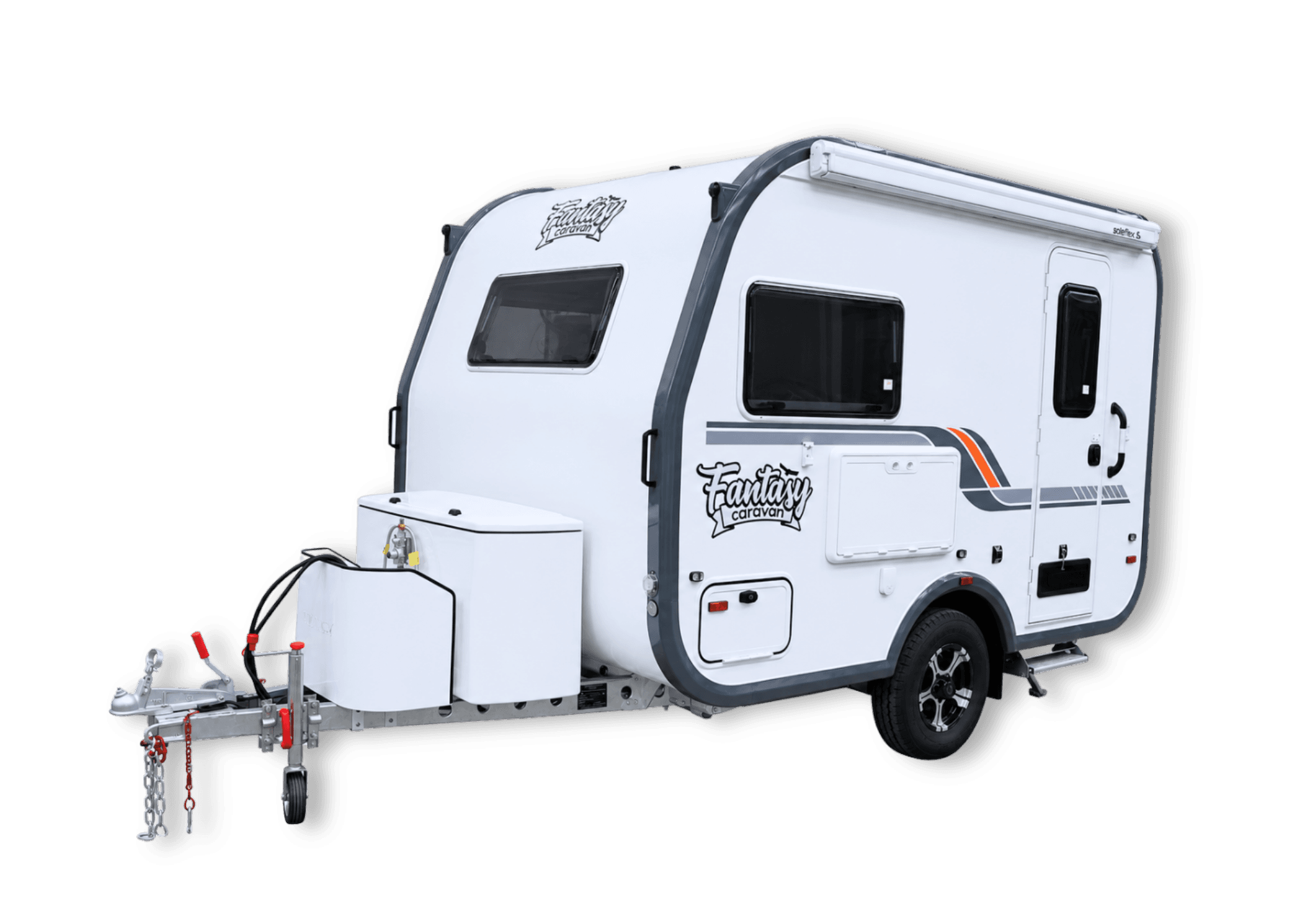
Fantasy Caravan Mystic 11 (2026)
With an ATM of just 1500kg, the lightweight and compact Fantasy Caravan Mystic 11 is a fantastic option for those without a heavy-duty 4WD. Its Tare Mass is a nimble 1200kg, giving it a payload of 300kg for a couple's gear, water, and supplies. A 1500kg ATM means this van can be comfortably and legally towed by a wide range of vehicles, including many medium SUVs (like a Toyota RAV4 or Mazda CX-5) and even some larger sedans or wagons. Its small 4.91m length also makes it easy to store and manoeuvre.
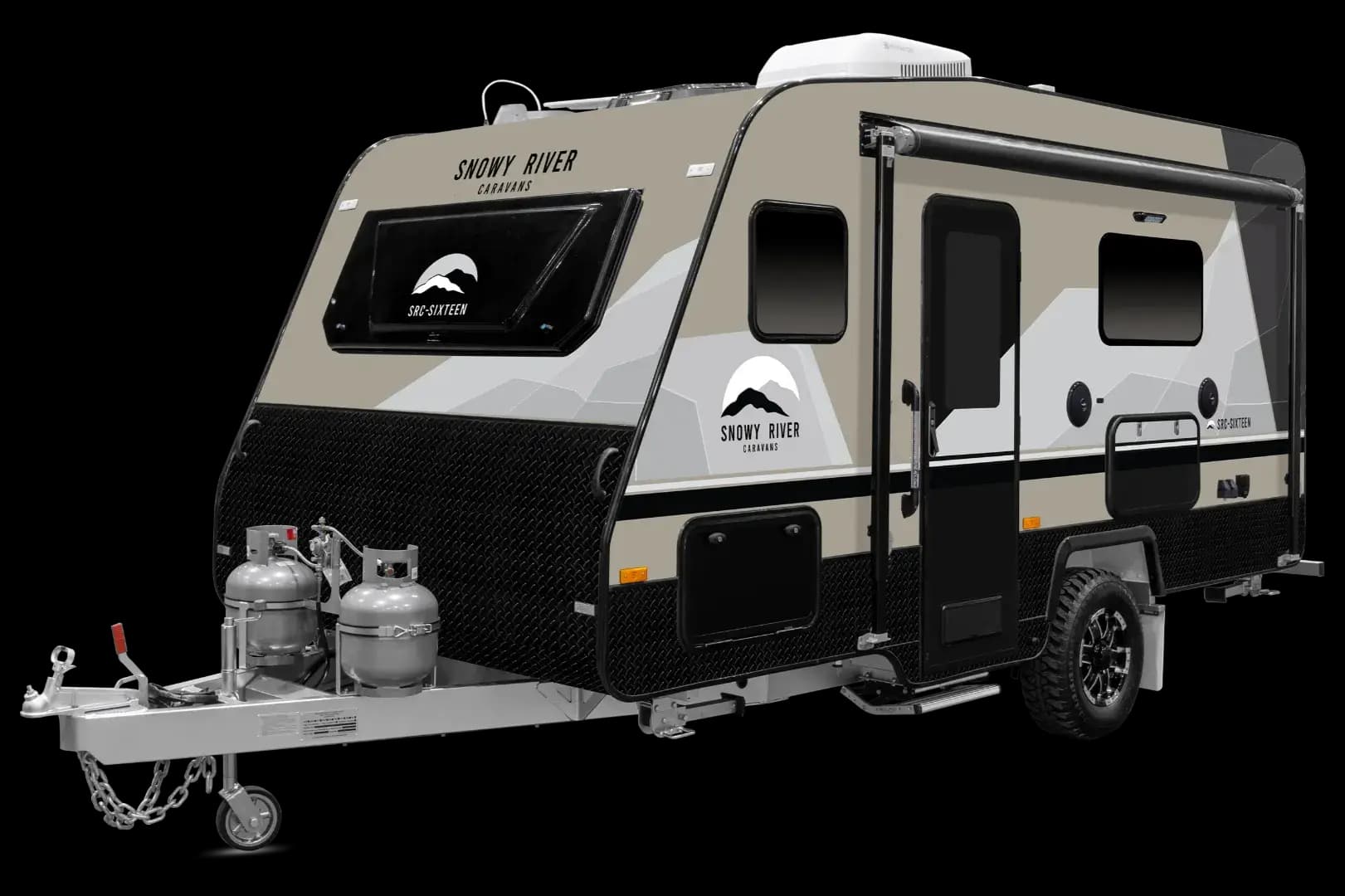
Snowy River SRC-16 (2026)
Stepping up in size and weight, the Snowy River SRC-16 has an ATM of 2500kg. With a Tare Mass of 1892kg, it offers a generous payload of 608kg. To tow this caravan, you'll need a vehicle with a towing capacity of at least 2.5 tonnes. This rules out smaller SUVs and brings you into the territory of larger SUVs (like a Ford Everest or Isuzu MU-X) and most dual-cab utes (like a Mitsubishi Triton or Ford Ranger). A TBM of around 250kg should also be expected, so your vehicle's tow bar must be rated accordingly.
Austrack Campers Gibb 16B Family Hybrid Offroad Caravan (2026)
Designed for families heading off the beaten track, the Austrack Gibb 16B is a hybrid caravan with an ATM of 3000kg. As it sleeps four and is built for rugged terrain, this weight is expected. A 3-tonne ATM requires a capable tow vehicle, typically a large 4WD wagon (like a Toyota LandCruiser or Nissan Patrol) or a high-spec dual-cab ute. These vehicles generally have a 3500kg towing capacity, which provides a comfortable safety margin. Its 7.1m length and off-road focus mean a stable, powerful tow vehicle is essential.
Jawa Tarwarri 18 (2026)
The Jawa Tarwarri 18 pushes into the upper end of the mainstream towing bracket with an ATM of 3500kg. Its Tare Mass is 2920kg, leaving a payload of 580kg for this four-berth off-road family van. An ATM of 3.5 tonnes requires a vehicle with the maximum towing capacity commonly available in Australia's light commercial market. This includes most full-size dual-cab utes and large 4WDs. It is absolutely critical to check your specific vehicle's GCM when towing at this weight, as it's easy to exceed the combined limit once your car is loaded with passengers and gear.
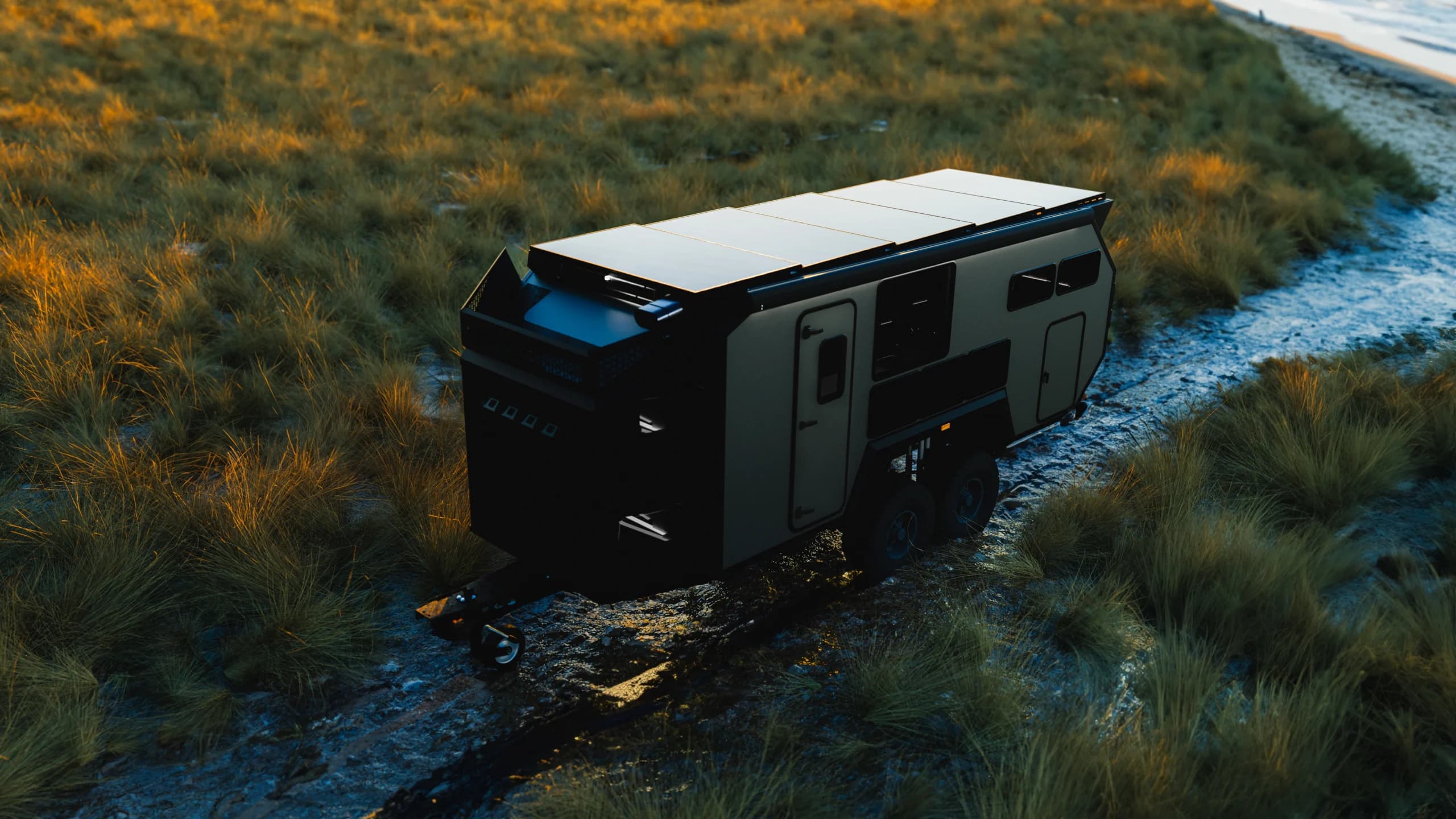
Bruder EXP-10 (2026)
At the pinnacle of off-road caravan engineering, the premium, Australian-made Bruder EXP-10 commands a serious tow vehicle. With a massive ATM of 4000kg, this caravan is beyond the legal capability of standard dual-cab utes and 4WD wagons. Its Tare Mass is 3200kg, providing an 800kg payload for extended remote travel. To tow the EXP-10, you will need a heavy-duty vehicle, such as an American truck (like a RAM 1500/2500 or Chevrolet Silverado) or a specifically modified vehicle with a certified towing capacity upgrade, like certain Toyota LandCruiser conversions. This is specialist territory and requires meticulous vehicle preparation.
Comparison of Featured Caravans
This table provides a side-by-side look at the models discussed, making it easy to see how their weights influence the type of tow vehicle required.
| Model | Sleeps | Price (AUD) | Tare (kg) | ATM (kg) | Payload (kg) | Required Towing Capacity (Min) |
|---|---|---|---|---|---|---|
| Fantasy Caravan Mystic 11 | 2 | $38,990 | 1200 | 1500 | 300 | 1500kg |
| Snowy River SRC-16 | 2 | $59,990 | 1892 | 2500 | 608 | 2500kg |
| Austrack Campers Gibb 16B | 4 | $77,990 | — | 3000 | — | 3000kg |
| Jawa Tarwarri 18 | 4 | $92,600 | 2920 | 3500 | 580 | 3500kg |
| Bruder EXP-10 | 2 | $385,000 | 3200 | 4000 | 800 | 4000kg+ |
Frequently Asked Questions (FAQ)
Q1: Where do I find my car's towing capacity and the caravan's weights?
Your car's key towing figures (Maximum Braked Towing Capacity, GCM, Max Tow Ball Mass) are in the owner's manual and often on a placard inside the driver's door jamb. The caravan's weights (Tare, ATM, GTM) are legally required to be stamped on a compliance plate, usually located on the A-frame or in the front boot.
Q2: What happens if I tow a caravan that's too heavy?
Towing a caravan that exceeds your vehicle's rated capacity is incredibly dangerous and illegal. It can lead to severe trailer sway, loss of control, brake failure, and chassis damage. In the event of an accident, your insurance will likely be void. You can also face significant fines, demerit points, and be ordered to unhitch the van on the spot.
Q3: Can I increase my car's towing capacity?
In some cases, yes, but it is a complex and expensive process. It requires a certified engineering assessment and often involves significant modifications, such as chassis strengthening and suspension upgrades (a GVM upgrade). It's not a simple bolt-on solution and is typically reserved for specific vehicles. For most people, it's more practical to choose a caravan that fits within their car's standard limits.
Q4: Does payload inside my car affect what I can tow?
Yes, absolutely, due to the Gross Combination Mass (GCM). The weight of passengers, luggage, and any accessories in or on your car is part of the GCM calculation. A heavier car means you have less 'weight budget' available for the caravan before you exceed the GCM, even if you are still under the 3500kg maximum towing capacity. Always factor in the real-world weight of your car when checking against the GCM.
Conclusion: Making a Safe and Informed Choice
Answering the question "what can my car tow?" is the most important piece of homework you can do before buying a caravan. It all comes down to the numbers. The caravan's Aggregate Trailer Mass (ATM) must never exceed your vehicle's maximum braked towing capacity.
Remember the key steps: check your car's manual and placards, inspect the caravan's compliance plate, and do the simple maths. Always account for Tow Ball Mass and the total Gross Combination Mass to ensure you have a safe margin. Getting this right doesn't just keep you legal—it ensures your holidays are safe, stable, and stress-free. Once you know your limits, you can confidently browse our extensive range of caravans for sale or use our caravan comparison tool to find the perfect match for your tow vehicle.