The Caravan Database
Best Caravans Under 2500kg in Australia
If you're shopping for a caravan that won't demand a heavy-duty tow vehicle, caravans under 2500kg are the sweet spot for thousands of Australian buyers. This weight class opens up a huge range of comfortable, well-equipped vans that can be towed by popular mid-size SUVs and utes — without stretching your vehicle (or your budget) to breaking point.
In this guide, we'll break down what the 2500kg figure actually means, what to look for when comparing models, which vehicles can handle the job, and how to make sure you get the most caravan for your money.
Why Choose a Caravan Under 2500kg?
The 2500kg ATM (Aggregate Trailer Mass) threshold is one of the most common in Australian caravanning, and for good reason:
- Wider tow vehicle choice — Most popular SUVs and dual-cab utes in Australia have a braked towing capacity of 2500–3500kg. Staying under 2500kg means you likely won't need to upgrade your vehicle.
- Easier and safer towing — A lighter van puts less stress on your drivetrain, brakes, and suspension, making it more predictable on the road — especially in crosswinds or on unsealed surfaces.
- Better fuel economy — Every kilogram you tow costs fuel. A lighter caravan can noticeably reduce your per-kilometre cost on long trips.
- Lower purchase price — Generally, lighter caravans cost less than their larger counterparts, leaving more in the budget for accessories or the trip itself.
If you're new to caravanning, a sub-2500kg van is an excellent starting point. Check out our caravan buying guide for beginners for a full walkthrough of the purchase process.
What Does 2500kg ATM Actually Mean?
Before comparing any caravans, you need to understand the weight figures manufacturers quote — and what they don't tell you.
ATM vs Tare Weight
- Tare weight is the caravan's weight as it leaves the factory, with no personal gear, water, or gas on board. Think of it as the "empty" weight.
- ATM (Aggregate Trailer Mass) is the maximum the caravan is legally allowed to weigh when fully loaded — that includes water, gas bottles, food, clothes, tools, and everything else you bring along.
The difference between these two numbers is your payload capacity — the amount of stuff you can actually put in the van before it's at its legal limit.
Why Payload Matters
A caravan with a 2200kg tare weight and a 2500kg ATM only gives you 300kg of payload. That might sound like a lot, but once you add:
- Full fresh water tank (~80–100kg for a 100L tank)
- Two 9kg gas bottles (~40kg full)
- Bedding, clothes, and personal items (~40–60kg)
- Food and kitchen gear (~20–30kg)
- Tools, levelling ramps, hoses (~15–25kg)
…you can see how quickly 300kg disappears. Always check the payload capacity, not just the headline ATM figure. A van that's technically "under 2500kg" but only offers 200kg of payload will be a constant headache to keep legal.
What to Look for in Caravans Under 2500kg
Layout and Floorplan
In this weight class, you'll find a solid variety of layouts, typically in vans between 16 and 21 feet:
- Island bed or east-west bed at the rear — great for easy access on both sides
- Club lounge or café dinette — efficient use of space during the day
- Full ensuite or mid-van bathroom — increasingly common even in lighter vans
- Bunks — some manufacturers offer a bunk layout under 2500kg, ideal for families with young kids
Think about how you'll actually use the van. Weekend getaways have different layout needs than six months on the road.
Build Quality and Materials
To keep weight down, manufacturers use a range of strategies:
- Composite panels instead of traditional timber framing — lighter, more rigid, and better insulated
- Aluminium cladding rather than painted composite or fibreglass
- Meranti or aluminium chassis — some brands use aluminium frames to save significant weight, though these often come at a premium
- Lightweight furniture and fittings — ply cabinetry, composite benchtops, and modular storage
Higher build quality often means better weight efficiency. A well-engineered van can include more features at a lower weight than a budget build that simply uses heavier materials.
Payload Capacity (Again)
This is worth repeating: the best caravan under 2500kg is the one that gives you usable payload. Aim for at least 350–400kg of payload if you're planning longer trips. For weekend use, 250–300kg may be sufficient.
Popular Caravan Types Under 2500kg
Not every sub-2500kg caravan is a traditional full-height van. Here's what's available:
Pop-Top Caravans
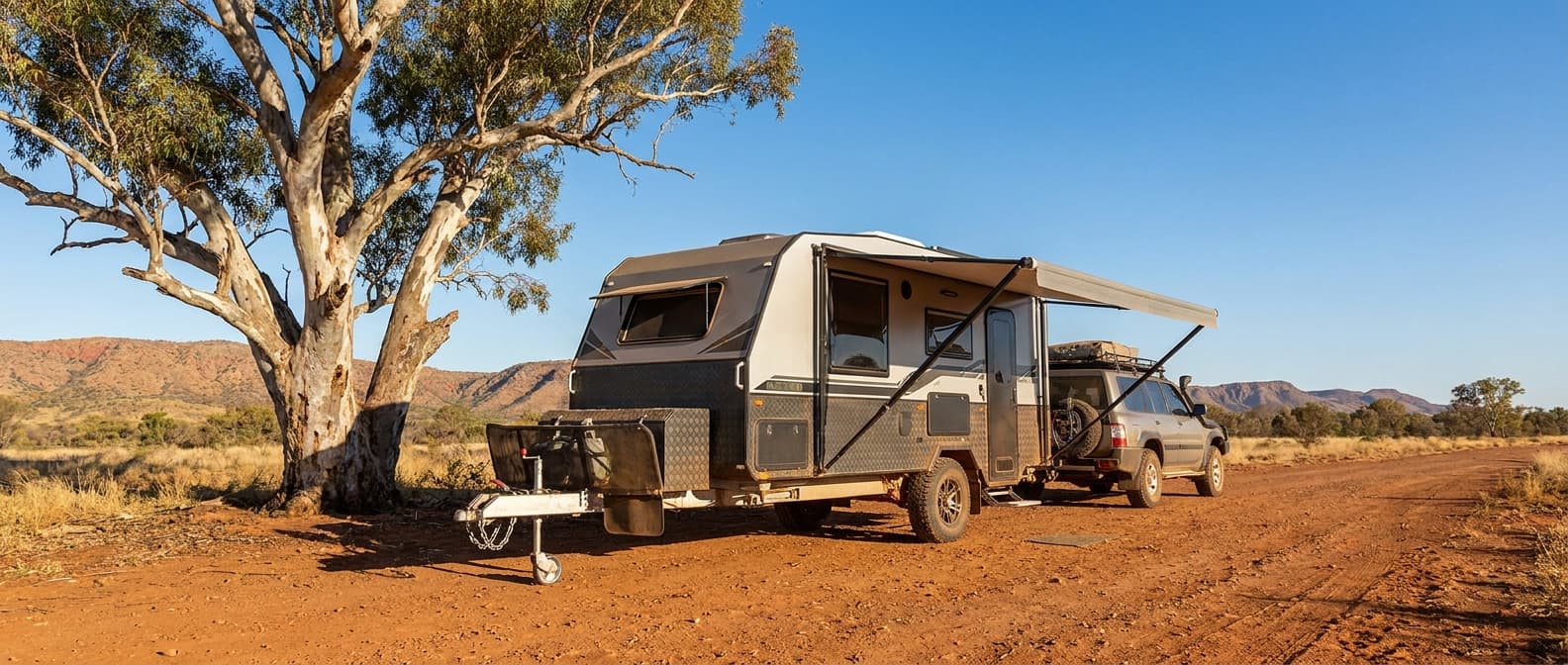
Pop-tops are a popular lightweight option. The roof section lowers for towing, reducing wind resistance and overall height. When parked, the roof pops up to give full standing height. These are typically 200–400kg lighter than an equivalent full-height van, which means more payload for your gear.
Full Caravans (Shorter Models)
Plenty of conventional caravans in the 17–20 foot range come in under 2500kg ATM. These offer the full touring experience — fixed roof, ensuite, kitchen, and comfortable sleeping — in a compact package.
Hybrid Campers
Hybrid campers blend the hard walls of a caravan with fold-out canvas bed ends. They're lighter and more compact on the road, but still offer surprising interior space when set up. A strong option if you want something easy to tow but roomy at camp.
Off-Road Models
Yes, you can find off-road caravans under 2500kg — though they're less common. These typically use independent trailing arm suspension, higher ground clearance, and reinforced chassis. Expect to pay more, and be aware that the off-road hardware eats into your payload allowance. For dedicated off-road picks, see our best off-road caravans guide.
Which Vehicles Can Tow a 2500kg Caravan?
One of the biggest advantages of staying under 2500kg is the range of tow vehicles that can handle the job. But there are a few numbers you need to check beyond just "braked towing capacity."
Key Towing Specs to Check
- Braked towing capacity — The maximum trailer weight the vehicle is rated to tow with trailer brakes fitted. Most mid-size SUVs are rated between 2000–3500kg.
- Tow ball download limit — The maximum vertical weight on the tow ball (typically 200–350kg). This affects how you load the van.
- GCM (Gross Combined Mass) — The maximum total weight of the vehicle plus the trailer, fully loaded. This is the figure that catches people out — you can be under towing capacity but over GCM if your vehicle is heavily loaded with passengers and gear.
Common Tow Vehicles for Sub-2500kg Caravans
- Dual-cab utes (Toyota HiLux, Ford Ranger, Isuzu D-MAX, Mitsubishi Triton) — most are rated to 3500kg and handle 2500kg caravans with ease
- Large SUVs (Toyota Prado, Isuzu MU-X, Ford Everest) — comfortable tourers with 3000–3500kg towing capacity
- Mid-size SUVs (Hyundai Tucson, Mazda CX-8, Subaru Outback) — some are rated to 2000–2500kg, making them viable but check GCM carefully
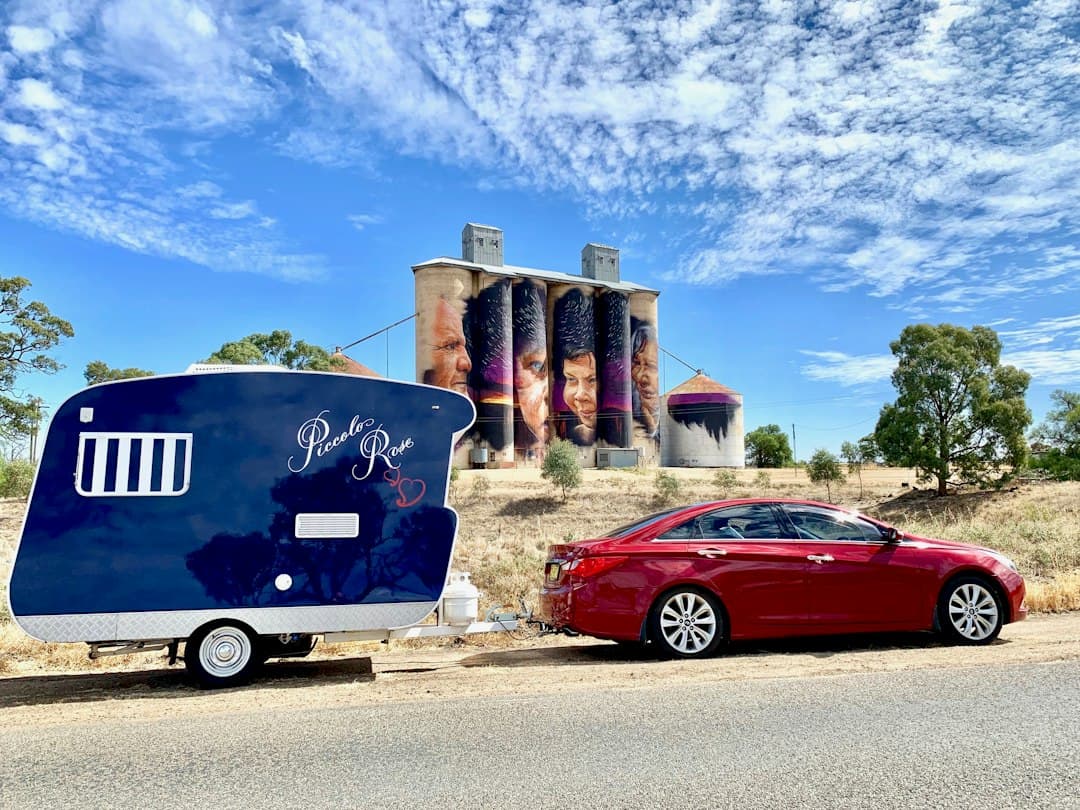
- Large sedans/wagons — a few larger vehicles can technically tow 2500kg, but comfort and safety may suffer on longer trips
Tip: Always check the specific variant and engine of your vehicle. Towing capacity can vary significantly between petrol and diesel models, or between 2WD and 4WD versions.
Tips for Keeping Your Caravan Under 2500kg
Even with a van rated under 2500kg ATM, it's your responsibility to make sure it stays under that limit when loaded. Here's how:
Weigh Your Caravan
The single most important thing you can do is get your caravan weighed — loaded and ready to travel, not empty in the driveway. Public weighbridges are available across Australia (search for your nearest one at most council or transport authority websites). Aim to weigh at least once a season, or whenever you change your setup significantly.
Pack Smart
- Carry water at the destination, not from home — only fill your tank when you arrive at camp, or carry just enough for the drive
- Decant products into smaller containers rather than bringing full-size bottles
- Use lightweight camping gear — modern chairs, tables, and cookware are dramatically lighter than older equivalents
- Audit your gear after each trip — if you didn't use it, it probably doesn't need to come next time
Upgrade Strategically
If you're consistently bumping up against your weight limit, consider:
- Swapping steel gas bottles for aluminium (saves ~4kg per bottle)
- Replacing the standard spare wheel with a lighter alloy rim
- Removing rarely used items that came with the van (e.g. heavy awning if you use a lightweight shade instead)
How to Compare Caravans Under 2500kg
When you're narrowing down your shortlist, create a simple comparison based on these key factors:
- ATM and payload — the most critical numbers
- Length (external and internal) — will it fit in your driveway and storage?
- Layout — does it suit your travel style?
- Water tank capacity — important for free camping
- Warranty and dealer support — especially if you're buying new
- Tow vehicle compatibility — confirm it works with your specific car, not just the class of vehicle
You can browse caravans on The Caravan Database to filter by weight, length, and features — making it easy to compare models side by side.
Conclusion
Caravans under 2500kg represent one of the largest and most versatile segments of the Australian caravan market. They're towable by the most popular vehicles on our roads, they're generally more affordable, and modern engineering means you don't have to sacrifice comfort or features to stay under the weight limit.
The key to buying well is understanding your payload capacity, matching the van to your tow vehicle's real-world limits, and choosing a layout that fits how you actually travel — not just what looks good in the showroom.
Ready to start comparing? Browse lightweight caravans on The Caravan Database, or dive deeper with our beginner's buying guide if you're still in the research phase.