The Caravan Database
The toilet is the part of a caravan nobody wants to talk about at the dealership, and it is the part you live with every day. The type you choose decides how often you need a dump point, how much water you carry, what you spend on chemicals or liners, and whether you can stay off-grid for three days or three weeks.
This guide explains the four main types you will find in Australian caravans, what the manufacturers say about each, and the rules on where the waste can go.
The short answer
A cassette toilet suits most buyers. It is the most common fixed toilet in Australian caravans, it is cheap to service, and dump points are built for it. Expect to empty it every few days.
A composting (separating) toilet suits long stays off-grid. It uses no flush water and no chemicals, and the solids container lasts far longer than a cassette. You have to be comfortable handling and disposing of the waste yourself.
A bag-sealing toilet suits people who never want to visit a dump point. It wraps each use in a sealed film. You pay for that in liners and a higher purchase price.
A black water tank with a flushing toilet is rare in Australian caravans. It feels most like a household toilet but needs a dump point you can drive up to, and the tank adds weight when full.
Cassette toilets
How they work
A cassette toilet has a fixed bowl inside the van. Waste drops through a blade valve into a removable tank, the cassette, which slides out through a hatch on the outside wall so you can carry it to a dump point. Some models have their own flush water tank. Others draw flush water from the caravan's main fresh water supply.
Typical specs
| Model | Waste tank | Flush water | Flush type | Toilet weight (empty) |
|---|---|---|---|---|
| Thetford C223-CS | 18 L | Van's main tank | Electric | 7.2 kg |
| Thetford C224-CW | 18 L | 9 L own tank | Manual | 8.0 kg |
| Thetford C263-CS | 17.5 L | Van's main tank | Electric | 8.0 kg (plastic bowl), 17.1 kg (ceramic) |
| Thetford C402-X | 19.3 L | 15 L own tank | Electric | 8.8 kg |
| Dometic CTS 4110 | 19 L | Van's main tank | 12V | 11.5 kg |
Thetford figures are from its cassette toilet technical specifications (June 2023). Some retailers list the C223-CS at 17 L. Thetford's own figure is 18 L.
How often you empty it
Neither Thetford nor Dometic publishes a number of uses per cassette. Thetford instead advises emptying the cassette when it is full or starts to smell, which it puts at 4 to 5 days with its Blue chemicals and 3 to 4 days with its Green range (Thetford). Many owners carry a spare cassette to stretch a stay.
A full cassette is heavy. Waste is mostly water, and at roughly a kilogram per litre an 18 to 19 L cassette is close to 20 kg of waste before you add the cassette itself. Factor that in if anyone in your group can't carry it to the dump point.
Blue or green chemicals?
Cassette chemicals break down waste and control smell. They are not interchangeable.
- Blue products such as Thetford Aqua Kem Blue last a little longer between empties by Thetford's guidance, but Thetford states Aqua Kem Blue is not suitable for septic tank systems.
- Green products such as Aqua Kem Green are septic tank-safe according to Thetford. Its FAQ notes they are more sensitive to hot weather than Blue products (Thetford FAQ).
This matters because many regional dump points drain to septic or small treatment systems. In 2026 Flinders University researchers reported that bronopol-based products were the most popular among 160 caravanners surveyed, and raised concerns that bronopol can break down into formaldehyde and may harm the microbes those systems rely on (Caravan Camping Sales report). If you camp in regional areas, a septic-safe product is the considerate choice.
Pros and cons
| Pros | Cons |
|---|---|
| Most common type, parts and chemicals sold everywhere | Empty every few days |
| Lightest fixed option | Full cassette is heavy to carry |
| Works with every dump point | Ongoing chemical cost |
| Uses little flush water | Smell if overdue or in hot weather |
Portable toilets
Smaller vans, hybrids and camper trailers without a fixed toilet often carry a portable "porta potti" instead. It has the same cassette idea in a freestanding unit: a flush tank on top and a waste tank underneath.
| Model | Waste tank | Flush water | Weight (empty) |
|---|---|---|---|
| Thetford Porta Potti 365 | 21 L | 15 L | 4.0 kg |
| Dometic 976 | 18 L | 8 L | 4.99 kg |
A portable toilet still counts for self-contained camping (see below), and Western Australian parks require campers to bring a portable chemical toilet where a campground has no facilities (WA Parks).
Composting and separating toilets
How they work
Caravan "composting" toilets are mostly urine-diverting, or separating, toilets. Urine runs to a front bottle. Solids fall into a rear chamber mixed with a dry medium such as coconut coir or peat, and a small 12V fan vents moisture and smell outside.
The name oversells it. The solids dry out but don't become finished compost inside the toilet. Nature's Head says composting stops below about 13°C (55°F), and recommends putting the solids in a compost pile or bin at home, or bagging or burying them when travelling (Nature's Head FAQ).
Typical specs
| Nature's Head | OGO | Air Head | |
|---|---|---|---|
| Solids capacity (maker's figure) | 60 to 80 uses, about a month for 2 people | 25 to 30 uses | Up to 80 uses |
| Urine bottle | 2.2 US gal (about 8.3 L) | Just over 2.4 US gal (about 9 L) | — |
| 12V power | Fan 0.07 A, under 1.8 Ah a day | Fan 0.48 Ah a day, agitator 0.6 Ah a day | — |
| Weight | 23 lb (about 10.4 kg) | About 28 lb (about 12.7 kg) | — |
These makers publish US figures, converted here. Australian retail prices at the time of writing were $1,895 for a Nature's Head (Solazone) and $2,095 for an OGO Origin (Everything Caravans). Check current prices before you budget.
The urine bottle fills much faster than the solids chamber, so expect to empty it far more often, into a toilet or a dump point. Thetford has also announced its own separation toilets for the Australian market from early 2026 (Thetford).
Pros and cons
| Pros | Cons |
|---|---|
| No flush water, no chemicals | Higher purchase price |
| Solids last weeks, not days | You handle and dispose of the solids |
| Very low 12V draw | Urine bottle needs frequent emptying |
| No dump point needed for solids | Needs a vent through the van wall |
| Slower to dry out in cold weather |
Waterless bag-sealing toilets
Bag-sealing toilets such as the Clesana C1 and LooSeal take a different approach. After each use, the toilet heat-seals the waste into a film liner, which you then throw away. There is no water, no chemical and no cassette to empty.
| Clesana C1 | LooSeal Elite | |
|---|---|---|
| How many uses per liner | 25 to 36 | 70 bags per roll (Evo model: 35) |
| Power | 12V, up to 27 A briefly while sealing | Built-in 55.5 Wh battery, up to 100 flushes per charge |
| Weight | 14 kg | 9.7 kg (Evo: 7.7 kg) |
LooSeal says its sealed bags can go in general rubbish (LooSeal). Retail prices at the time of writing were around $2,499 for the LooSeal Elite (Award RV), with liner rolls about $25 each (Suncoast Caravan Service). Clesana is distributed in Australia by Vanable Group. We couldn't find a published Australian price.
The trade-off is running cost. Every use consumes liner film, so a family going through liners quickly will pay noticeably more per week than for cassette chemicals. Note that WA parks do not accept "toilet chemical bags" in place of a proper portable toilet where a campground has no facilities (WA Parks), so check how the park you're visiting treats bag systems.
Black water tanks and macerator toilets
US-style RVs usually flush into a large black water tank under the floor. That setup is uncommon in Australian caravans, where cassettes dominate, but you will see it in some motorhomes and a few large or custom vans.
Black water tanks range from about 70 L to 250 L (Caravan World). To empty one, you drive to a dump point, connect a hose and drain the black tank first, then the grey. The dump point must sit lower than the outlet. Macerator systems grind waste so it can be pumped through a narrower hose into a holding tank, typically 60 to 110 L (Caravan Camping Sales).
The appeal is a household-style flush and longer intervals between emptying. The catches are the weight of a full tank against your payload, and needing a drive-up dump point rather than any toilet you can walk a cassette to.
Where can you empty a caravan toilet?
Cassette and black water waste goes to a dump point. The CMCA's self-contained vehicle policy states that all black water must be held in tanks or cassettes and disposed of at a dump point (CMCA policy). In Western Australian parks, waste from portable chemical toilets must not be tipped into campground toilets (WA Parks). Other states and individual parks set their own rules, so check before you go.
Finding one. The Australian Government's National Public Toilet Map can filter for dump points, and the CMCA maintains a dump point network (RACQ guide).
Composting solids and sealed bags. We found no national or state rule specifically covering bagged composting-toilet solids. Follow the toilet maker's instructions and the local council or park rules, and never leave waste or bags at a campsite.
Do you need a toilet to free camp?
Many councils and free camps only allow fully self-contained vehicles. Under the CMCA's Leave No Trace self-contained policy, a vehicle needs a toilet, but it doesn't need to be a fixed one. An installed toilet or a proprietary portable toilet secured while travelling both qualify. The policy also asks for fresh water, a sink draining to a grey water tank or sealed container, a sealable rubbish bin, and enough capacity for at least three days (CMCA policy). The policy doesn't mention composting toilets, so if you rely on one, ask the campground or council first.
Caravans with a shower and toilet
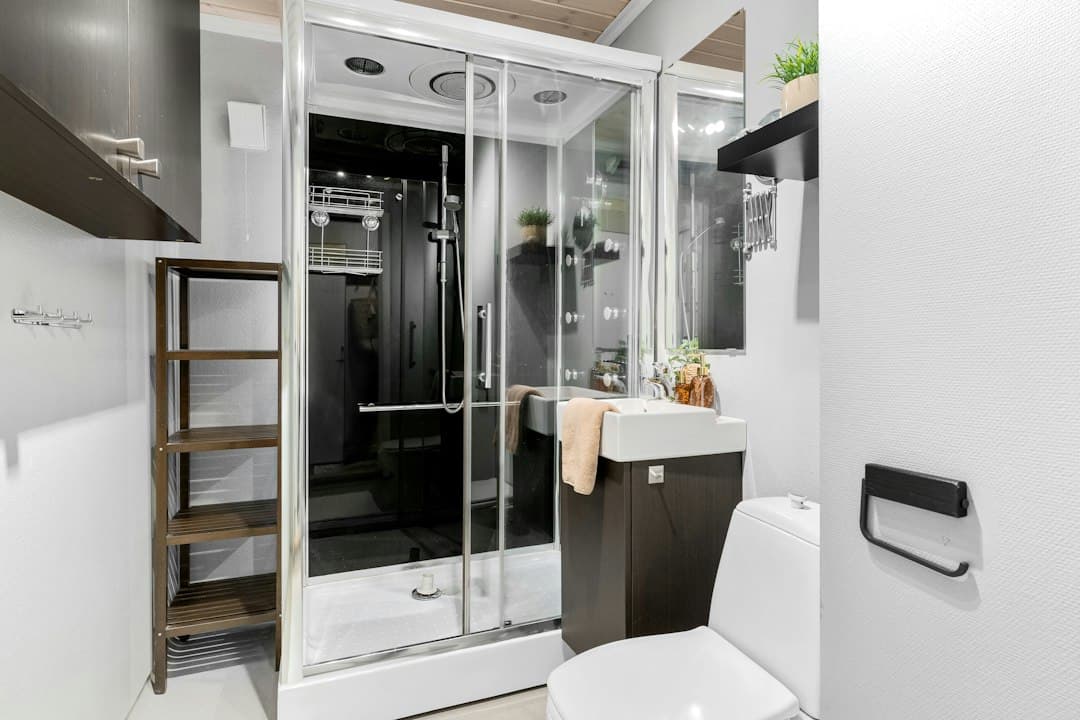
Most full-size Australian caravans now come with an ensuite. Of the 319 published models in The Caravan Database, 246 list an internal ensuite. Smaller vans, hybrids and camper trailers are where you'll find vans without one, or with an outside shower and a slot for a portable toilet instead.
Manufacturers rarely state which toilet a van comes with on their spec sheets, so ask the dealer. If you want a composting or bag-sealing toilet, ask whether the factory can fit one. It is far easier to do before delivery than to retrofit a vent or hatch later. You can compare layouts, water capacity and weights side by side in the database.
Questions to ask before you buy
- Which toilet brand and model is fitted, and what is the cassette or tank capacity?
- Does it flush from its own tank or the van's fresh water?
- Can I swap to a composting or bag-sealing toilet at the factory, and what does it cost?
- Where is the cassette hatch, and can I reach it with an annex up?
- Is there room to carry a spare cassette?
- How is the toilet vented, and does it need power to run?
Bottom line
Choose the toilet for the way you travel, not the brochure. If you move every few days and stay at parks or near towns, a cassette is cheap, simple and supported everywhere. If you want to stay out for weeks, a separating toilet cuts water use and dump point visits, at the cost of handling the waste yourself. Bag-sealing toilets remove dump points altogether but cost more to run.
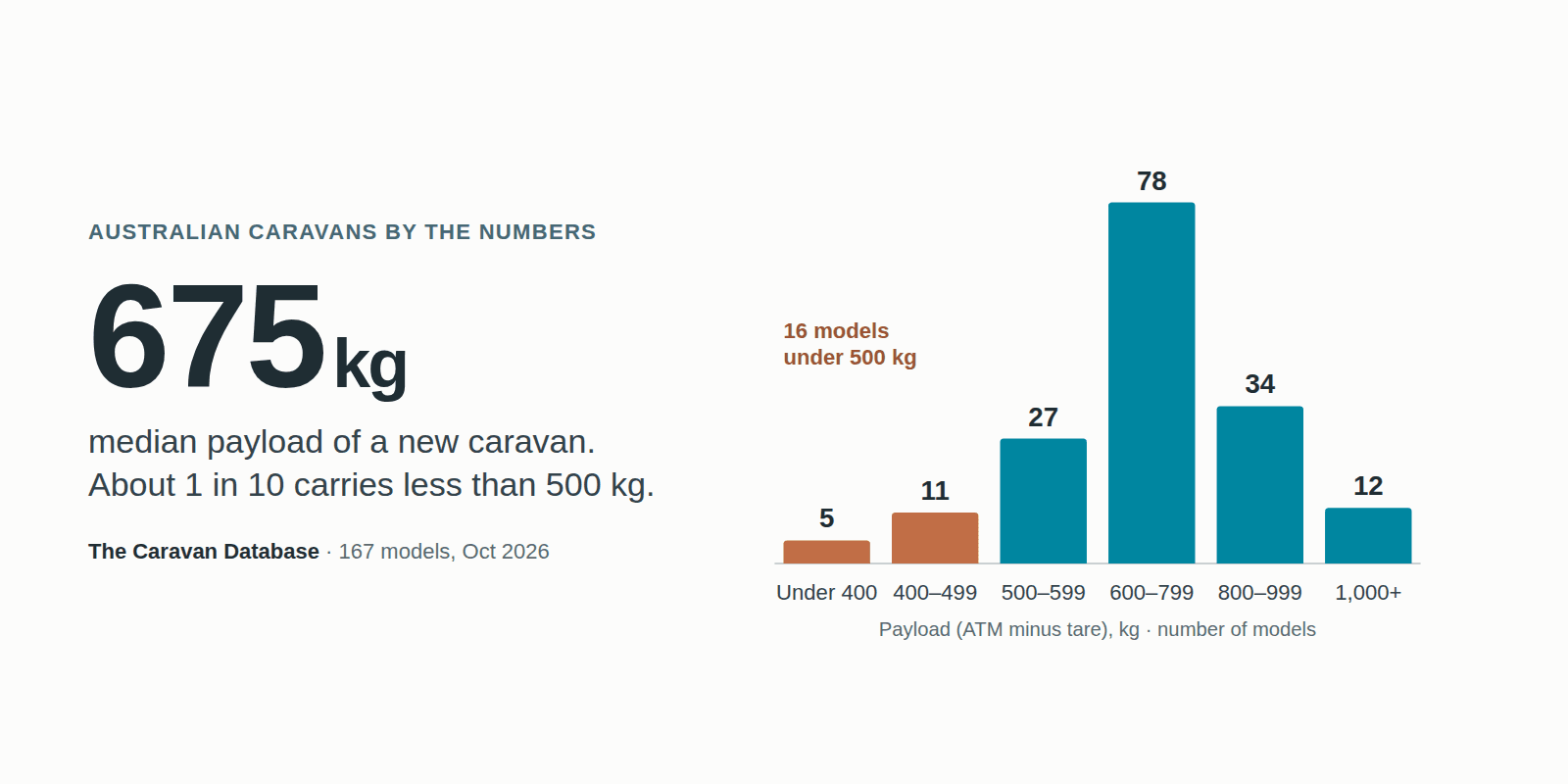
Whatever you choose, it all adds weight, so check the van's payload in our ATM vs tare explainer. For staying out longer, see our best off-grid caravans guide.
Product figures are manufacturers' published specifications, checked 24 November 2026. Prices are retailer prices at that date and change often. Rules on waste disposal vary between states, councils and parks, so check local requirements.